Thursday, February 16, 2006

These people would love a good wipeout.

Somehow, the confluence of the Olympics, American Idol, and my bedside reading now makes sense.

I was reminded a few weeks ago that I hadn't yet dug into Richard Powers' Time of Our Singing, in spite of the fact that it's been on my shelf now for a couple of years. I think it was a fellow blogger who inspired me to start reading (I'd give credit, but I can't remember who it was...), and it's been a long time since I've been this gripped by a novel.

Young professional singer Jonah Strom and his accompanist/brother are watching the Met debut of Jonah's voice teacher. Jonah's more nervous about his teacher's vulnerability onstage than he ever is about his own. His brother asks "Why would anyone want her to fail?"

The response was so on-the-money that I must've read it ten times before moving on.

"For the excitement. The drama missing in their own lives. Look around. These people would love a good wipeout. Now that would be real opera."

I was told when I started working in this business that opera is a blood sport. I occupy a tame place within its pantheon, but even from here I can see the wisdom of that statement.

Everyone loves danger. It's why the tenors and the sopranos have mass appeal. Even if you know nothing about singing, it's easy to understand how dangerous it is to sing so high... how small the margin between inspiration and ruination.

Which of course, brings me to American Idol. I've been told that the young lady whose audition I happened upon a couple of weeks ago has made it to the final 24. Good for her. I think I'm going to try to start watching. I've never seen the part of the show where they actually winnow down the finalists, and I'm curious.

All Marketers Are Liars...

...But Great Marketers Tell Stories We Want to Believe.

Also reading Seth Godin's fascinating book on marketing. Finding myself obsessed with this subject lately, even though it ranks way up there with fundraising in my list of the least favorite aspects of my job. Having a hard time changing gears in general - the fall and early winter were full of music. Now I'm seeing spreadsheets and ad copy in my dreams (no, actually, those would be nightmares), and in spite of the fact that such things normally appeal to the anal-retentive side of my nature, I'm having a hard time going to the dark side.

Involved in some interesting and promising marketing discussions, most of which I probably won't go into here because our Director of Media Relations not only reads this blog, he forces me to write it. (Kidding!!!!)

Music Snobs

10:04pm. I'm writing while watching men's figure skating. Canadian Shawn Sawyer just did his free skate to Richard Addinsell's Warsaw Concerto, and I nearly fell off the sofa. This piece of music shaped one of my formative experiences with "classical" music at age 15. I had all but forgotten the whole humiliating event, but it just came crashing back. I'll recover in a day or two, and I'll spin out the story.


Monday, February 13, 2006

Flooding Therapy

I mentioned a few days ago that one potential response to critical audition feedback is Flooding Therapy. An oversimplified definition: Take whatever frightens you and immerse yourself in it until it loses its power.
This afternoon brought a new application for flooding when the beautiful bag of Valentine candy (sent by one of our most loyal Wolf Trap supporters) arrived in my office. Having just spent the better part of the last 18 months in Weight Watchers meetings, I actually felt dizzy as I uncovered at least 20,000 cellophane-wrapped calories. (This is, sadly, not an exaggeration.)

Anyway, I figure if I could let it sit on my desk for a few weeks and not eat it, maybe I'll cure myself of my sugar addiction. Or not.

Audition Chattage

I was reminded last week that I should never take the quantity and content of audition room chatting for granted.

There's very little conversation that takes place during a typical audition. "Good morning/afternoon/evening. What would you like to sing?" followed by "Would you please sing the [Mozart] aria?" and finally by "Thank you." Maybe it's because this always seems so sterile, or because I'm bored with the same old exchange of words, that I tend to jump in with chattage. Comments on a rare aria, the weather, a particularly cool headshot, a colleague we have in common, whatever.

Truthfully, we also do it with the goal of relaxing a nervous auditioner, and sometimes it's a ploy to unearth the personality behind a cautious, do-no-harm performance. We do tend not to talk much before a first aria, though, because it's heartless to interrupt the initial walk-in-the-room, hand-music-to-pianist, say-hello, start-singing loop. Prime time is before a second aria request, or particularly, as someone is exiting.

What I underestimate is that so often the singer reads something into our brief exchange. The norm is so formulaic, so formal, that any deviation feels as if it must mean something. I guess sometimes it does, but frankly, we're not that smart. Sometimes it simply means we're trying to be civilized. But the lesson in this for me is that I shouldn't take these things lightly.

Case study: a true story. And I think I can tell it because the soprano in question actually ended up getting hired by us. It was the end of a very very long week, and this soprano woke us up with a go-for-broke first aria. I wanted to get to know her a bit so I tried to utter a simple compliment about her striking pink jacket. I have no idea what I said in my fevered and exhausted state, but it came out somewhere between idiotic and mildly offensive. Thank goodness she was too focused on her audition to notice as I tried to dig myself out of the conversational ditch.

Figaro Balances His Checkbook

Before we allow our friend Figaro to take the stage in his classy new Filene Center set, there are lots of numbers to crunch.

We've been renting productions for our large venue for over 25 years. On one level it makes a lot of sense. We only do 2 performances in this venue, our small scene shop and staff simply can't build a production to fit on a 75-foot wide stage, and common sense should dictate that renting would be most cost-effective.

But in recent years we've had increasing trouble finding new productions of standard repertoire (go here if you want to know why it's only standard rep) that fit our stage (second largest in the country), are available for rent, and don't have technical requirements that will break the bank ( raked stage being one of them).

Our theatre is multi-use, to put it midly. About 100 performances in about as many days every summer - pop/rock, jazz/blues, musical theatre, dance, symphony, world music. The crew does seem to enjoy it when the opera company's in the theatre, because they get the chance to produce instead of present. But it's still very expensive to get a non-opera house ready to accept a full opera production, then to wedge in a pop show on our pre-performance dark day so the singers can get a day of rest and we don't lose critical income.

In very general terms, over 60% of our scenic budget has been used to transport, load in, build, run, strike, re-set, strike again, and load out rental sets. Largely because the rental productions were, of course, not developed with our specific, dare I say, peculiar requirements in mind. And it costs a lot to make them function in our theatre.

So we're turning the tables. Putting at least 60% of our budget into designing and constructing a production that conforms to the assets and liabilities of our theatre, so that we can keep the load/build/set/strike costs to a minimum. Elegant in theory, tricky in application. We'll keep you informed.

Next discussion: amplification. Be afraid.

Saturday, February 11, 2006

Vincerò

I'm usually not a sucker for pageantry, but I was pretty entranced by the opening ceremonies in Torino. Wish I had their scenic, costume, and lighting budget.:)

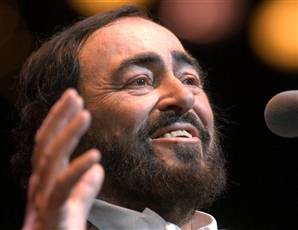
And if I can do anything as well at 70-something as Pavarotti can still sing, I'll go to heaven a happy soul. The TV cameras were not kind to the shoe-black-dyed eyebrows, but damn can he still sing. Visceral, exciting. Not without warts, and down a half-step, to be sure, but for godsake, get over yourself!

I'm an Oboe, Too...

If you haven't taken the quiz (If You Were in an Orchestra...), hop on board. After reading about all the bemused bloggers who find out they're all oboes, I was sure I wouldn't conform. Shows how much I know. The kicker is that the real deal over at oboeinsight turned out to be a viola.

American Idol Beats Grammys

The Washington Post reports that last Wednesday's Grammy broadcast was bested by the regular weekly installment of American Idol. I should probably be offended, for I guess I'm supposed to be a custodian of good taste. And this probably puts an unnecessarily Pollyanna spin on it, but I'm oddly encouraged. There's something reassuring about shunning the untouchably professional music establishment for something far more raw, participatory... dare I say home-spun...

I had a surreal American Idol experience when I was flat on my back and under the influence of legal narcotics a couple of weeks ago. Lovely young woman walked onto the show and sang a few bars of Gilda's aria from Verdi's Rigoletto. It sweet in a teenage sort of way but it was irrelevant to the real opera world. Panel asked her for a pop song. Afterward, they told her that they didn't like her pop stylings at all, but they thought she was a phenomenal opera singer. I hold her harmless, but Simon Cowell professes to know better. (And of course, I know he doesn't, but still!)

Here We Go Again

Against my better judgment, more audition comments.


  • Very understated. Definitely needs to turn on the heat.
  • The makings of a real voice; severely manipulated, though
  • The physical gestures are repetitive and only connected to the vocal production
  • She seems either nervous or lost or sad; or all of the above
  • The sheer footprint of the voice isn’t purely sumptuous, but she’s very expressive, the instrument is healthy and responsive
  • He’s good, but his inventiveness doesn’t sustain him through this whole long scene
  • Making good musical sense of the Stravinsky; the courage to invest in the phrasing, find the core of the intentions behind them
  • Seems to have really grown into the voice since last year
  • There’s a complicated underbelly to the sound, but it seems to be what gives him the bottom extension at this time
  • Energetic for sure, but it needs more variety in the approach; feels a little assaultive after a while; there needs to be more than raw indignation
  • I don’t find much worrisome about the picture; there are unfinished aspects, but it has the hallmarks of an exciting work in progress
  • You can see and hear her executing everything she’s been taught, but it’s so hard to believe any of it
  • The cabaletta shows potential, but again she’s not really driving the train; feels like the piece is pulling her along; that preternatural calm and lyric thing she does so well works against her; she needs to hang onto it but make it a vessel for fire, angst, pathos
  • Doesn’t seem to be top-flight just yet, but he’s certainly good; doesn’t bring a higher level of depth and strength to the music, but serves it well; meets it halfway
  • I could just use 10% less some of the time; the intensity actually has a counterproductive effect after a while
  • Legato has to get better.
  • Afraid she’s getting bad advice. Or no advice at all.
  • Has the right color for the high-flying rep, but I’m not sure about the facility up there
  • She always looks as if she’s working very very hard; perpetually intense, worried, concerned
  • There’s lovely color in the midvoice, and the legato and traction have improved since last year
  • I’m always pleasantly surprised by his sense of humor
  • The Bellini is too placid; it needs moments of compressed, desperate momentum; she plays the obvious pathos just a little too much; needs to work against the grain a little.
  • He doesn’t fully trust his equipment yet. But this is still one of the best renditions I have heard

As I promised, we'll be back on the summer pre-production track next week. But I was reminded this week of a post I've been meaning to make on audition room "chattage." So I'll try to throw that in, too.

Meanwhile, the snow is piling up here in northern Virginia. Seized by the urge to go walk in it.

Thursday, February 09, 2006

Danger, Will Robinson

Multiple requests this week to talk about last Saturday's Metropolitan Opera National Council Auditions Mid-Atlantic Regional finals at the Kennedy Center. I was one of three judges, and I've gotten emails, calls, and blog comments asking for some detail on how the panel arrived at its decisions.

Of course, that's pretty much not possible without violating a series of professional confidences. What I am able to do, though, is call your attention to the guidelines that all MONC judges follow. IMPORTANT: This is not confidential or proprietary information. It may also be found on the MONC website.

The purpose of The Metropolitan Opera National Council Auditions is:

1) To discover exceptional young talent.

2) To provide a venue for young opera singers from all over the country and at all different levels of experience to be heard by a representative of The Metropolitan Opera and to assist those with the greatest potential in their development.

3) To identify new talent for The Metropolitan Opera and for possible participants in the Lindemann Young Artist Development Program.

Number 1 is obvious. But pay particular attention to Numbers 2 & 3. And if you have questions about the outcome of MONC auditions, revisit the performances while keeping this rubric at the front of your consciousness.

Note what it does not say. It is not a mandate to simply choose the singer who gives the most satisfying, musical, or crowd-pleasing performance. It is not an imperative to choose the singer who is likely to have the most successful career. (Note: Number 2 does not say the greatest career potential, but rather the greatest potential for development.]

My experience with public competitions is that most of the time, the persons or persons who meet the specific qualifications for the competition are often the same ones who give the most compelling performances. But that's not always the case, and that's when public opinion and panel decisions diverge.

One of the more curious (but wholly predictable) things about the comments I've gotten about last Saturday's competition is that they all disagreed with the panel, but each one disagreed with the others. What a great art form this is.

Audition Comments Firestorm

Many of you have talked me back off the ledge, so more audition comments will be forthcoming. I've received 2 negative responses to previous comment postings and 15 encouraging ones. So, assuming that this little exercise has value, I'll post some more this weekend. If you're someone who is afraid of unfliching feedback (even if it's anonymous), then consider this an opportunity to desensitize yourself. We used to call it Flooding Therapy.

Life Goes On

Meanwhile, back at the Trap, we push papers, drown in emails, go to meetings and work on our new Figaro. Even though the blog is still mired in audition talk, my days are spent in pre-production mode. And for my sanity (and maybe for yours: Step away from the audition preoccupation!), next week's blog talk turns toward opera.

P.S. If you don't recognize the picture at the top, you weren't watching TV in 1965.

Monday, February 06, 2006

Cheaper than Therapy

A few weeks ago I started getting responses to the unedited audition comments that I'd begun to post. Some feedback came in the form of posted comments (anyone can comment on an entry by clicking the link at the bottom), some were emails sent to my address (see right), and others were posted on forums and other websites.

"You Go, Girl"

There were quite a few encouraging responses, and that was a great relief. I had debated long and hard before including these comments on the blog, but ultimately decided to go for it for the following reasons.

  • Many singers actually believe that what audition panels write and say about them is far more vituperative and downright mean than it actually is.
  • Many times, auditioners get bogged down in details (what if I breathe in the middle of that one phrase... is that "e" open or closed... should I say anything when I enter the room...) or despair over a single cracked high note or forgotten word. The big picture is far more important, and again and again, responses to the auditions show this.
  • And (this is the most difficult one), many singers never have the opportunity to receive and integrate specific feedback. The Emperor's New Clothes is alive and well in conservatory and studio situations. I'm all for unconditional love and encouragement, but it only gets you so far. Even if feedback is all wrong, you have to learn how to deal with it.

The Dark Side

I filter ("moderate") the comments to this blog, which means that I see them before I allow them to be visible from the website. I've only witheld a few. Many bloggers won't publish anything that is signed "Anonymous", but I realize that singers and colleagues may have legitimate gripes with a posting but be justifiably afraid of saying so and signing their real names.

Generally, the objections go like this:

  • You must hate singers.
  • You are unbelievably self-important.
  • How could you be so pretentious?
  • You know nothing about singing/opera/singers, etc.
  • My favorite recent one reminds us that "persons involved in opera are genetically predisposed to ego and drama."

Now, I realize that most of you don't know me. But the craziest part about this is that I've been struggling all my life to have the courage to speak my mind, believe in my instincts, and be convinced that my opinion has any value. And any of us who last more than a few minutes in this business have to have a healthy ego. But drama queen? I wish. I can't even throw a diva fit when my life depends on it.

Of course, the whole damn blog is about my opinions. That's the nature of the beast. If this were a third-person, just-the-facts narrative, no one would read it. But in finding out that readers believe I am boorishly overconfident and pretentious, I realize that I've come a long way. And probably saved myself thousands of dollars in therapy.

Anyway, in spite of my brave defense, I've been scared off just a little. For sure won't post any more comments, and will probably be a little gun-shy for a while. But I'll get over it.

Concert Report

Recital with Alan Held last Friday was one of those nights that's all about the music. I'm not prone to jitters, but I usually have to battle several crises of confidence during any given performance. (Did I really mean to choose that tempo? Was that dynamic choice too indulgent? What was I thinking??) But that little evil voice inside my head was quiet. Probably because I'd been so sick that I was just relieved to be there at all. And because my colleague was so calmly and unswervingly confident that I didn't have to absorb any free-flowing anxiety. And because I was so giddy that all of the various bells and whistles in my pre-show talk (video, wireless audio, iPod, PowerPoint...) functioned flawlessly.

Finally, Looking toward Summer!

First big project: Figaro! We're doing a brand-new production of Figaro in the Filene Center in August - the first time in over 25 years that we've built an opera production for that theatre. If you've followed the Filene Center opera discussion that we started last summer, you know that we've had our challenges. But this approach will allow us to take artistic ownership in this production in much the same way that we take great pride in all of the new productions we do for The Barns. And, believe it or not (and it does strain credulity), we'll be able to do it without spending any more money than we did to rent.

Excited about Figaro, as I always am. I'm as weary as you of the Mozart hype, and I get impatient with the "timeless masterpiece" approach. But I've done 8 Figaros, and each time I enjoy it more. Reading about David McVicar's production that just opened at Covent Garden has further whetted my appetite. Lots of people disagree with him, but I'm totally on board. The legacy of the play is revolutionary, but the primary experience of the opera is about the people. I started out with Figaro as a newlywed who shared Susanna's excitement; I returned to it many times to cry with the Countess, and now I've moved on to Marcellina.

Didn't mean to go on that long... plenty more where that came from... back in a few days!

Thursday, February 02, 2006

Now I Remember...

...why I so enjoy these recitals with opera company alums. Well, there are lots of reasons, but one of the best is the chance to play with grown-ups again.

Not to knock all of the amazingly gifted young singers that populate most of the rest of my life. They're intuitive and musical, generally more talented than I'll ever be, and their presence is energizing. But as much as I've gotten accustomed to playing the mentor role (actually, that's a lie, I haven't gotten accustomed to it at all... I still feel like an imposter, but that's another post...), it's easy to grow weary of being the perpetual bearer of responsibility, the keeper of history, the bottomless well of encouragement and advice.

But then I get this occasional chance to sit at the piano with a colleague who is comfortable in his own skin, intimately acquainted with his musical voice, and unafraid to speak his mind.

Rehearsal, Act II

Most of today spent on the second half of the concert. Three songs by Duparc ("Le manoir de Rosamonde", "Soupir", "La vague et la cloche") present one of the biggest ensemble challenges on the program. Tempo a big consideration in the first and third; gotta find that magical place where adrenaline meets traction. Amazing that this guy wrote less than 20 songs. Even more astonishing that he destroyed many of them because he felt they were inferior.

Two songs from Rorem's War Scenes ("An Incident" and "Specimen Case"). I really haven't played much Rorem since grad school, and I've been mesmerized by these. Texts are from Walt Whitman's memoir of the Civil War, Speciman Days. Rorem set them to music in the thick of the Vietnam War. And I don't need to say much about why they're timely yet again.

A simple, touching song written especially for Alan by a colleague from Ravinia, Robert Gutmacher - "Der Gottsucher". Then some satisfying Americana - Celius Dougherty's setting of "Shenandoah" (if Virginia ends up adopting this as her state song, we'll all be the richer for it) and two of Copland's Old American Songs ("At the River" and "I Bought Me a Cat"). Alan said he couldn't possibly sing a recital in a barn without including that last one.

Anyway, most of today's effort spent on Duparc, with some review of Ibert, and general checking of tempi and transitions. The music is ready - now to tweak the content of the pre-show talk. (An hour before the concert, next door at the Center for Education.)

Small World

Realized that we have a sizeable Millikin University contingent here this weekend. Millikin is Alan's alma mater, Wolf Trap CEO Terre Jones used to run the Kirkland Fine Arts Center at Millikin, and our Discovery Series host Rich Kleinfeldt is also a Millikin alum.

And I almost forgot... Rich's group, the Washington Saxophone Quartet, gave an absolutely perfect concert this past Sunday as part of our church's Concerts at St. Peter's series. Buy one of their CDs or catch one of their concerts right away.

Met Auditions on Saturday

Off to judge the Middle Atlantic Regional Met National Council Auditions at the Kennedy Center on Saturday afternoon. Back online next week!

Wednesday, February 01, 2006

Back to the Music

Felt good to be a semi-functioning member of society again. A few hours was about all I could stand, but it's a start.

Alan endured a delay-ridden drive to Wolf Trap this morning, and we ran through the entire program this afternoon. Ended up making some tweaks to the order to help with the pacing, and actually struck one number because the first half was running way too long.

The Program - First Half

For Alan, this concert is all about coming home. He's developed a program that's full of terrific music, to all of which has a personal connection. He was a young artist here in 1987 and 1988, during a period when I was a Wolf Trap staff coach and pianist. His housing hosts from that period have become life-long fans and friends, and he's been back to the area on a regular basis for work with the Washington National Opera.

We start with "Caro, mio ben". (Alan's college audition aria:)) Those potent 17th-century Italian songs shouldn't be the sole province of students - they're far too beautiful. Then on to "Pietà, signore" (he has a great story to tell about this one), and an excerpt from one of his Wolf Trap roles - Leporello's Catalogue Aria. And for those Wagner fans, one of his current signatures, Amfortas' Prayer from Parsifal.

Alan loves Carl Loewe's story songs, and I'm glad he's introduced me to the quirky "Tom der Reimer". Mahler's "Der Tamboursg'sell" ("The Drummer Boy" from Das Knaben Wunderhorn) is touching and tragic, and it presents a humbling challenge for the accompanist: how to make a piano represent substitute for an effective orchestration. I've eschewed both available printed piano reductions in favor of my own hybrid interpretation. Something I wouldn't have had the nerve to do years ago, but I
seem to be getting reckless in my old age. I've been researching drummer boys and have a new perspective on the piece that breaks my heart.

Then one of my favorite groups; three of the songs that Ibert wrote for the bass Feodor Chaliapin to sing in the 1933 film of Don Quixote. Not just a consummate musician, but a fearless actor, Chaliapin played the title role in three different versions of this movie - one each in English, French, and German. All this from a Russian opera singer. We'll end the half with Alan's Wolf Trap audition aria "Quand la flamme de l'amour".

Reminiscing

Lots of "remember when's". One of my favorites involves a Butterfly production at Washington Opera in the early 90's (I think) during which a young Alan Held was brought in at the last minute to sing the Bonze, and I was assigned assistant conductor duties on stage left.

The Bonze's entrance is full of atmospheric gong sounds, achieved by the percussionist from the orchestra leaving the pit and coming up to the stage left aria to bang a huge gong. Yours truly had the responsibility of cuing said percussionist.

Well, I knew it would happen eventually. The percussionist came upstairs without the gong mallet. He ran back downstairs but didn't have enough time to make the trip. (Opera waits for no one.) I told Alan/Bonze to pay no attention to whatever god-awful sound should emanate from the gong as he made his entrance. And I took off my Nike, flaunted all the union rules I'd been taught, warmed up the gong and whacked the hell out of it.

Details on the second half tomorrow.